
Every single day, you rely on your garage door to work perfectly. You press the little button in your car, the heavy door slides up smoothly, and you drive right in. It is something most of us never even think about—until the day it suddenly stops working.
Imagine being late for work, pressing the remote, and hearing a horrible grinding noise while your car stays trapped inside. Or worse, coming home after a long day of shopping at the Sharyland Towne Crossing, only to find your garage door stuck halfway open, leaving your whole house exposed to the world.
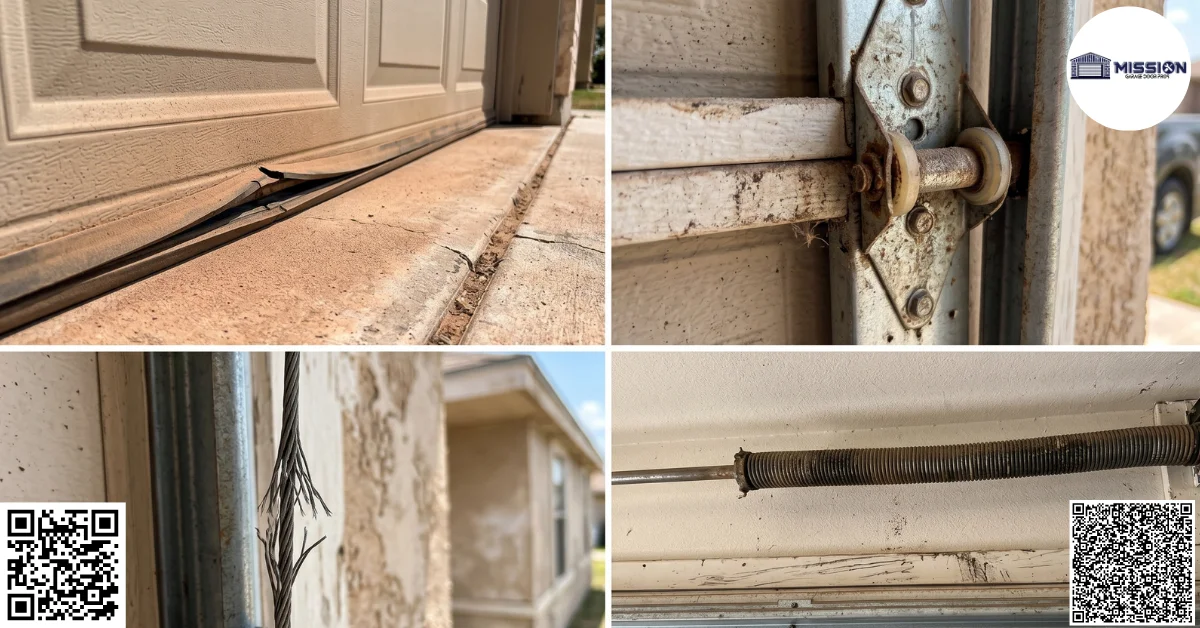
Living here in Mission, Texas, our garage doors have a truly difficult job. They do not just deal with the normal wear and tear of opening and closing thousands of times a year. They also have to survive the brutal, scorching South Texas heat, blowing dust from nearby fields, and intense humidity from the Rio Grande Valley. Over time, these harsh environmental factors take a massive toll on steel cables, heavy springs, sensitive electronics, and rubber seals.
When things go wrong, you need reliable information and fast solutions. This comprehensive guide will break down everything you need to know about garage door repair, how local weather patterns destroy your door, how to troubleshoot common issues safely, and when it is time to call in the local professionals at Mission Garage Door Pros.
The Real Cost of South Texas Weather on Your Garage Door
We love our beautiful, sunny weather in Hidalgo County, but it is absolutely brutal on mechanical systems. A standard garage door is the largest, heaviest moving object in your entire home. It relies on a delicate balance of tension, friction, and electrical signals to operate safely. When you throw extreme weather into the mix, that balance gets disrupted quickly.
How Triple-Digit Summer Heat Warps Metal and Ruins Electronics
During the peak of summer in Mission, temperatures regularly soar past 100°F. Inside a closed, uninsulated garage, that temperature can easily climb to over 130°F. This intense heat causes several major problems:
- Metal Expansion: Steel tracks, rollers, and hinges expand when they get hot. If your tracks are even slightly misaligned, this heat expansion can cause the rollers to bind, jam, or pop completely out of the track.
- Circuit Board Failure: The garage door opener is a computer. Extreme heat can cook the delicate circuit boards inside the opener unit, causing it to lose its memory, ignore remote control signals, or stop working entirely.
- Lubrication Melting: High-quality garage door lubricants are designed to stay slick, but extreme heat can cause cheap grease to thin out, melt, and drip right off the moving parts. This leaves your hinges and rollers rubbing together dry, creating massive friction and loud, scary noises.
The Hidden Danger: Dust, Dirt, and Agricultural Debris
Mission is surrounded by beautiful farmland, and we experience plenty of windy days. This means the air is constantly filled with fine dust, sand, and agricultural debris.
When wind blows dust into your garage, it acts like a magnet for any wet grease or oil on your tracks and rollers. The dust mixes with the lubricant to create a thick, gritty paste. Instead of helping the door slide smoothly, this paste acts like liquid sandpaper. Every time the door opens, this gritty mixture grinds away at the bearings inside your rollers and wears down the smooth surface of your tracks, leading to premature failure.
Humidity and Rust Along the Rio Grande Valley
Because we are located so close to the Rio Grande and the Gulf of Mexico, our air carries a lot of moisture. High humidity is the ultimate recipe for rust.
If the protective zinc coating on your garage door springs, cables, or hinges begins to wear off, the humid air will immediately start to corrode the bare steel. Rust weakens metal rapidly. A rusted spring loses its elasticity and can snap violently without warning, while rusted cables can fray and break, causing the heavy door to crash down to the floor.
The Anatomy of a Garage Door: What Breaks and Why
To understand why your door is acting up, it helps to know the names of the parts that keep it moving. A garage door system is made up of dozens of components working together in perfect harmony. Here is a breakdown of the parts that most frequently require professional garage door repair.
+-------------------------------------------------------+
| TORQUE TUBE & SPRINGS |
+-------------------------------------------------------+
| [DRUM] [DRUM] |
| || || |
| || C || C |
| T || A || A T|
| R || B || B R|
| A || L || L A|
| C || E || E C|
| K || || K|
| ||========= [TOP GARAGE PANEL] ============|| |
| || || |
| ||========= [MIDDLE PANEL 2] ==============|| |
| || | |
| ||========= [MIDDLE PANEL 1] ==============|| |
| || || |
| ||========= [BOTTOM PANEL] ================|| |
| [O] <--- ROLLER ROLLER---> [O]|
+-------------------------------------------------------+
|xxxxxxxxxxxxxxx SENSOR <=======> SENSOR xxxxxxxxxxxxxxx| (Safety Eyes)
+-------------------------------------------------------+
1. Torsion Springs and Extension Springs
Your garage door opener does not actually do the heavy lifting to open your door. That job belongs to the springs. Springs act as a counterweight system, neutralizing the weight of a 150- to 300-pound door so that it can be lifted easily with just a few pounds of force.
- Torsion Springs: These are heavy duty springs mounted on a metal rod directly above the garage door opening. They tightly wind up when the door closes and unwind to lift the door.
- Extension Springs: These are found on older doors and run horizontally along the overhead tracks on both sides of the door. They stretch out to build up lifting power.
Because these springs are constantly under thousands of pounds of twisting or stretching tension, they eventually wear out. Most standard springs are rated for about 10,000 cycles (one cycle is opening and closing the door once). If you use your door four times a day, your springs will last roughly 5 to 7 years before metal fatigue causes them to break.
2. Lifting Cables
Cables are made of multiple strands of galvanized steel wire twisted together. They attach to the bottom corners of your garage door, run up the sides, and wind around drums connected to the torsion spring rod. When the spring unwinds, it pulls the cables, lifting the door. If a cable rubs against the track or gets rusted due to the Mission humidity, individual wire strands will start to snap. If the cable snaps completely, the door will instantly twist sideways and jam tight in the tracks.
3. Track Rollers
Rollers are the small wheels that fit into the side tracks and allow the door panels to guide up and down smoothly. They can be made of plastic, steel, or heavy-duty nylon.
- Plastic rollers crack easily under extreme heat.
- Steel rollers are loud and can rust if not oiled perfectly.
- Nylon rollers with sealed ball bearings are the absolute best choice for Mission homes because they are incredibly quiet, handle the heat beautifully, and keep blowing dust out of the bearings.
4. Metal Tracks
The tracks are the metal guides that run up the walls and across your garage ceiling. If a car bumps into a track while parking, or if a loose bolt causes the track to pull away from the wall framing, the rollers will get stuck. Running a garage door on bent or misaligned tracks can burn out your opener motor or cause the entire door to fall completely out of the ceiling.
5. Automatic Garage Door Openers
The opener is the motorized brain of the operation. It uses a chain, a rubber belt, or a screw drive to pull the door along the tracks. Modern openers are packed with smart technology, but they are still vulnerable to power surges caused by South Texas thunderstorms, worn-out internal plastic gears, and dead backup batteries.
Troubleshooting Guide: Common Symptoms and What They Mean
Before you panic and assume you need a brand-new garage door system, let's look at some common issues you can troubleshoot safely on your own. Many times, a door that refuses to close is just reacting to a simple, easily fixable problem.
What You See or Hear | What the Real Problem Usually Is | How to Fix It |
The door starts going down, stops, and reverses back up while the opener lights flash. | The safety eye sensors are misaligned, dirty, or blocked by sunlight. | Wipe the lenses with a microfiber cloth and align them until the indicator lights stay solid. |
The opener makes a loud humming sound, but the door does not move at all. | Broken torsion spring or stripped internal gears inside the opener drive. | Do not try to open it. Look above the door for a clear gap in the spring coil; call a pro. |
The door makes a horrific, deafening screeching or grinding sound whenever it moves. | Dry metal hinges, unlubricated rollers, or accumulated grit in the tracks. | Clean out the tracks with a damp rag and spray all metal pivot points with silicone lubricant. |
The door opens perfectly but moves incredibly slowly and seems to struggle terribly. | The door is completely out of balance, or the spring tension has weakened. | Pull the red emergency cord and lift manually. If it feels heavy, the springs need adjustment. |
Case Scenario: The Mystifying Case of the Blinking Safety Eyes
Imagine it is 2:00 PM on a scorching July afternoon in Mission. You pull out of your driveway, hit your remote control button, and watch your garage door start to roll down. Suddenly, it stops, reverses direction, and goes all the way back up, while the lights on your opener unit start blinking rapidly.
You look around. There are no toys, trash cans, or bicycles blocking the door. What is going on?
This is a classic local issue caused by intense Texas sunlight. Garage doors use two safety sensors (called safety eyes) located about six inches above the ground on either side of the opening. One sensor sends an invisible infrared light beam to the receiving sensor on the opposite side. If that beam is broken by a child, a pet, or an object, the door will refuse to close for safety reasons.
However, during certain times of the day, the blinding South Texas sun can shine directly into the lens of the receiving sensor. The bright sunlight completely overpowers the tiny infrared beam, tricking the sensor into thinking something is blocking the path.
The Solution: You can easily fix this by building a tiny "sun shield" out of cardboard or dark tape to shade the lens of the sensor from direct sunlight, or you can contact an expert in garage door repair to install upgraded sensors designed to filter out ambient sunlight interference.
The Ultimate DIY Maintenance Routine for Mission Homeowners
The absolute best way to avoid expensive emergency repairs is to take care of your garage door before it breaks down. By spending just 15 minutes every three months performing basic preventative maintenance, you can easily double the lifespan of your springs, rollers, and opener motor.
Step 1: The Visual Inspection
With the garage door completely closed, stand inside your garage and look closely at all the hardware.
- Look at the springs above the door. Do you see any gaps, rust, or separated coils?
- Check the steel cables hanging down the sides. Are there any loose, frayed, or fuzzy-looking strands?
- Look at the brackets and hinges. Are there any loose screws or missing bolts?
- Examine the tracks. Are there any dents, bends, or spots where the track looks warped?
If you notice frayed cables or a broken spring during your visual inspection, do not attempt to operate the door. Contact an insured professional immediately.
Step 2: The Silent Track Clean-Up
Because of our dusty Mission air, cleaning your tracks is vital. Grab a dry microfiber cloth or an old rag. Wipe down the inside of both vertical and horizontal tracks to remove all built-up black sludge, dust, and old grease.
Important Note: Never apply thick automotive grease or WD-40 to your garage door tracks! Thick grease traps blowing dirt and turns into an abrasive paste that destroys rollers. WD-40 is a degreaser, not a long-lasting lubricant; it will dry out quickly and strip away the protective coatings on your parts.
Step 3: Proper Lubrication
To keep your door operating quietly in the intense heat, you need to use the right product. Look for a dedicated heavy-duty silicone spray or a lithium-based garage door lubricant at your local home improvement store.
Apply a light, precise mist to the following moving parts:
- The Roller Bearings: Spray directly into the center core of each wheel where the ball bearings live (do not spray the outside nylon wheel itself).
- The Hinges: Spray the pivot points where the metal door segments bend as the door opens.
- The Lock Bar: Lubricate the manual locking mechanisms to prevent sticking.
- The Torsion Springs: Spray a light coating along the entire length of the springs. This reduces friction between the metal coils as they tightly wind and unwind.
Step 4: Testing the Balance of Your Door
This is the single most important test you can perform to save your opener motor from burning out early.
- Close your garage door completely.
- Disconnect the opener by pulling down firmly on the red emergency release cord.
- Grip the handle on the door panel and lift the door manually.
- If the door is perfectly balanced, you should be able to lift it smoothly with just one hand, and it should stay perfectly in place when you let go of it halfway up (about three to four feet off the ground).
If the door feels incredibly heavy to lift, or if it violently crashes down to the floor when you let go, your springs have lost their tension. The automatic opener is forcing itself to lift all that dead weight, which will rapidly destroy its gears. You need a professional technician to re-balance the spring tension safely.
Safety First: Why DIY Spring Replacement Can Be Highly Dangerous
We live in an era of internet video tutorials, and it can be highly tempting to try and fix everything around your house yourself to save a quick buck. However, when it comes to garage door springs and lifting cables, DIY repairs can have catastrophic results.
According to data collected by federal safety organizations, garage door accidents cause thousands of severe injuries every single year. The reasons for this are simple physics and extreme mechanical tension.
The Power of a Torsion Spring
To lift a heavy steel double-car garage door, a torsion spring must be wound up incredibly tight using specialized steel winding bars. When a technician winds a spring, they are storing an immense amount of kinetic energy inside that cold steel coil.
If an untrained homeowner attempts to loosen or adjust a spring using incorrect tools—like a standard screwdriver, a pair of vice grips, or a pipe wrench—the tool can easily slip out of position. When that happens, the spring will instantly unwind with the force of a small explosion.
The metal winding cone can shatter fingers, break wrists, or cause severe facial injuries. Furthermore, if a tightly wound spring snaps while you are standing near it, shards of sharp steel can fly across the garage like shrapnel.
The Danger of Frayed Cables
The steel cables are under the same intense tension as the springs. If you attempt to unscrew the bottom brackets where the cables attach while the door is under tension, that bracket will instantly rip off the wall like a bullet.
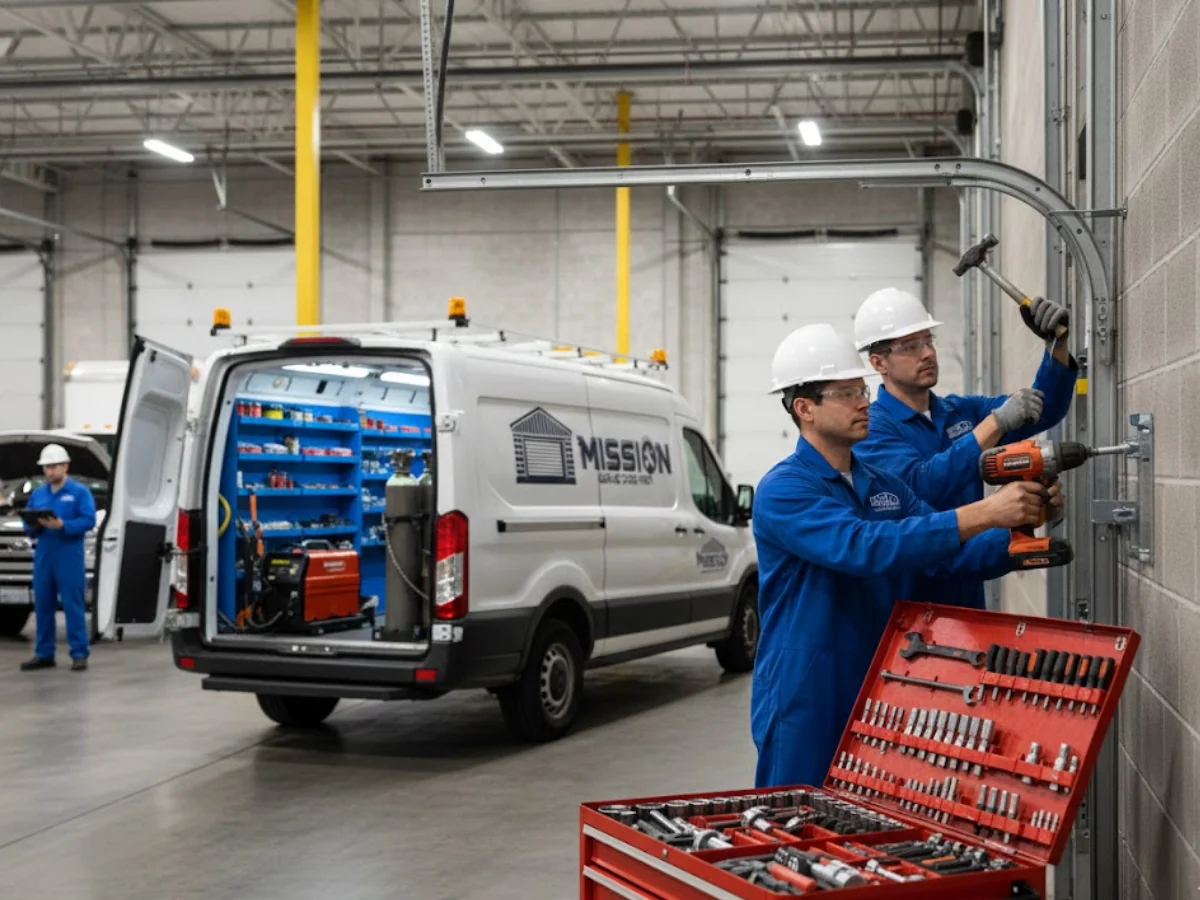
Professional garage door repair technicians undergo extensive safety training, use heavy-duty specialized equipment, and understand the exact physics required to safely neutralize the dangerous tension before removing any broken parts. For your own safety and the peace of mind of your family, leave spring and cable replacements to licensed experts.
Selecting the Right Garage Door Material for the Mission Climate
If your current garage door is severely dented, rusted through, or past its prime, it might be time to replace it entirely rather than continuing to pour money into frequent repairs. When shopping for a new door in Mission, you must consider our specific climate.
1. Traditional Non-Insulated Steel Doors
These are the most common and budget-friendly doors available. They consist of a single layer of stamped sheet steel. While they look great and are highly affordable, they offer zero protection against the fierce South Texas heat. A non-insulated steel door acts like a giant radiator, absorbing the blazing afternoon sun and transferring all that heat directly into your garage, making your home's air conditioning system work twice as hard.
2. Insulated Triple-Layer Sandwich Doors (Recommended)
These doors feature a "sandwich" design: an outer layer of durable steel, a thick core of dense insulation (either polystyrene or polyurethane), and an inner layer of steel protective backing.
+---------------------------------------------------------+
| OUTER STEEL LAYER | INSULATION CORE | INSIDE LAYER|
| (Fights Wind & Sun) | (Blocks Texas Heat)| (Clean Look)|
+---------------------------------------------------------+
This design is perfect for Mission homes for several reasons:
- Thermal Barrier: It blocks the extreme summer heat from entering your garage, helping keep the space up to 20 degrees cooler.
- Structural Strength: The three-layer design makes the door incredibly rigid and strong, allowing it to easily withstand high winds during severe tropical storms or severe weather events.
- Noise Reduction: The insulation dampens vibration, making the door cycle much quieter.
3. Faux-Wood Composite Doors
Many homeowners love the elegant, rustic look of real wooden garage doors. However, real wood does not handle the harsh humidity of the Rio Grande Valley very well. Real wood can warp, crack, rot, and peel when exposed to cycles of blistering sun and heavy moisture.
Faux-wood composite doors offer the best of both worlds. They utilize a tough, insulated steel core wrapped in a realistic UV-protected composite material that mimics the texture and grain of real wood perfectly, without ever requiring sanding, staining, or painting.
Frequently Asked Questions (FAQs)
Why does my garage door make a loud popping sound when it opens?
This distinct popping noise usually indicates that your torsion spring coils are binding together due to a total lack of lubrication, or your rollers are heavily worn and are momentarily catching inside the track curve before violently snapping free. Applying a high-quality silicone spray directly to the spring and replacing old rollers will typically solve this issue instantly.
Can I replace just one broken garage door spring, or do I have to change both?
It is highly recommended to replace both springs at the same time, even if only one of them has snapped. Because both springs were installed on the same day and have gone through the identical number of opening and closing cycles, the unbroken spring has experienced the same metal fatigue and will almost always break within a few weeks or months of the first one.
How do I know if my garage door opener needs to be replaced or just repaired?
If your opener is less than 10 to 12 years old and is experiencing a straightforward mechanical problem like a stripped plastic gear, a broken drive belt, or loose wiring, a targeted repair is highly cost-effective. However, if the motor itself is burnt out, if the unit lacks modern rolling-code security features, or if it is an older model that lacks built-in safety sensors, replacing it entirely is the smarter and safer long-term investment.
What should I do if my garage door gets jammed halfway open during a power outage?
You should locate the red emergency release cord hanging from the opener track and pull it firmly downward and backward toward the motor to disconnect the door from the automated drive carriage. Once disconnected, you can manually lift the door completely open or slide it safely closed by hand, allowing you to secure your home until power is fully restored.
Final Thoughts
Your garage door is a vital part of your home's security, energy efficiency, and daily convenience. The intense summer heat, blowing field dust, and humid air of Mission, Texas, create a demanding environment for any mechanical system. By keeping your tracks clean, lubricating your moving parts every few months, and paying close attention to any changes in how your door sounds or moves, you can easily catch minor issues before they transform into dangerous, expensive emergencies.
When serious problems do arise—like a broken torsion spring, a snapped steel cable, or a completely jammed door—always put safety first. Reach out to qualified, local professionals who possess the proper tools and training to get your door back on track safely and efficiently.
How Can Mission Garage Door Pros Help You?
If your garage door is screeching loudly, struggling to lift, or completely stuck, you don't have to tackle it alone! Mission Garage Door Pros is your premier, trusted local specialist for all types of residential and commercial garage door repair in Mission, Texas.
Our team of highly trained, fully licensed, and deeply experienced technicians understands exactly how the unique South Texas climate affects your garage door system. We arrive fully equipped to handle broken spring replacements, track realignments, cable repairs, and advanced opener troubleshooting safely, quickly, and affordably. We take immense pride in providing honest, high-quality workmanship and exceptional customer service to our neighbors throughout Hidalgo County.
Don't risk your safety or leave your home vulnerable. Call us today or drop by our office to schedule your expert diagnostic inspection and get your garage door running as smoothly and quietly as the day it was installed!
- Business Address: 2301 N Shary Rd, Mission, TX 78574
- Phone Number: (956) 997-9215