
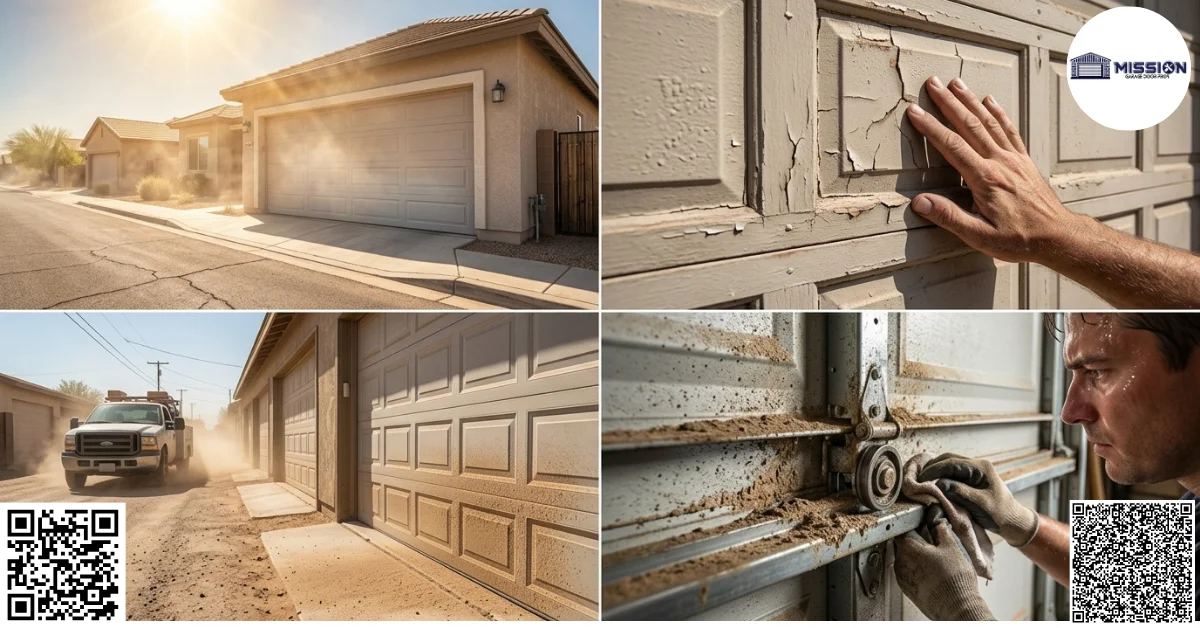
If you live in Mission, Texas, you already know two things very well: the summer sun can get incredibly hot, and the Rio Grande Valley wind loves to blow dust across everything. While we humans can run inside to enjoy the sweet relief of central air conditioning, our homes have to sit outside and take a beating from the elements day after day.
Among all the parts of your home, your garage door takes one of the biggest hits.
As the largest moving part of your house, your garage door relies on a delicate balance of heavy springs, metal tracks, sensitive electronics, and perfectly aligned panels. When you mix temperatures that regularly soar past 100°F with the fine, abrasive dust native to Hidalgo County, you get a recipe for mechanical trouble.
In this comprehensive guide, we will look at exactly what the local climate does to your garage door system. We will share expert secrets from 15 years on the job, give you practical troubleshooting steps, and help you understand when a quick DIY fix will work versus when it is time to call in a professional for garage door repair.
1. The Physics of Texas Heat: What Summer Does to Garage Door Hardware
To understand why your garage door acts up in July and August, we have to look at how extreme heat alters the physical properties of metal, wood, and electronics. When the sun beats down on your driveway, your garage acts like a giant oven, trapping heat and raising temperatures inside the space well above the actual outdoor reading.
Metal Expansion and Track Misalignment
Most garage doors operate on a system of steel or aluminum tracks. Basic physics tells us that metals expand when they get hot and contract when they cool down. In Mission, TX, the daily temperature swing can be drastic.
When your garage door tracks expand due to intense heat, they can warp, bow, or shift slightly out of alignment. Even a fraction of an inch of movement can cause the rollers to bind or catch inside the track. If you notice your garage door jerking, making loud grinding noises, or stopping halfway through its cycle during the hottest part of the day, thermal expansion is a likely culprit.
Sizzling Openers and Fried Circuit Boards
Your garage door opener is a small computer paired with an electric motor. Like your laptop or smartphone, it does not like to get overheated. The space inside your garage ceiling can easily reach 130°F or more during a South Texas summer.
This extreme ambient heat puts immense stress on the opener's logic board (circuit board) and capacitor. High temperatures can dry out capacitor fluids, melt delicate solder joints, and cause the plastic gears inside older opener models to soften and strip out under load. If your opener suddenly stops responding to remotes, blinks erratically, or smells like burning plastic, the heat has likely compromised the electrical components.
Sagging and Warping Door Panels
The material of your garage door reacts uniquely to intense sunlight:
- Steel Doors: Steel gets incredibly hot to the touch. This intense heat can cause lightweight, uninsulated steel doors to oil-can—a term used when the metal expands and creates a popping or buckling sound as it moves.
- Wood Doors: Wooden garage doors face severe structural risks in Mission. The combination of intense heat and dry spells bakes the natural moisture right out of the wood, leading to splitting, warping, shrinking, and cracking. Once a wooden door warps, it loses its balance, putting extra strain on the entire automated system.
2. The Invisible Enemy: How Rio Grande Valley Dust Destroys Moving Parts
While heat does its damage through expansion and temperature stress, dust acts like fine-grit sandpaper, slowly grinding away at the mechanical integrity of your system. In Mission, agricultural winds and dry soil conditions mean that fine dust finds its way into every nook and cranny of your garage.
The Problem with Traditional WD-40 and Sticky Grease
One of the most common mistakes homeowners make is spraying standard WD-40 or heavy automotive grease onto their garage door tracks and rollers when they hear a squeak.
Expert Warning: Standard WD-40 is a degreaser and solvent, not a long-lasting lubricant. Worse yet, heavy grease acts like a magnet for airborne dust.
When dust mixes with thick grease, it creates a dark, abrasive paste. This paste gets trapped inside the roller bearings and track grooves. Instead of helping the door slide smoothly, this gritty sludge increases friction, forces the motor to work twice as hard, and prematurely wears out the bearings.
[Airborne Dust] + [Heavy Wet Grease] = [Abrasive Grinding Paste]
Result: Ruined Bearings, Strained Motors, and Snapped Cables
Bearing Failure and Stripped Gears
Your garage door uses bearings in several key spots: inside the rollers, within the pulleys, and at the end plates of your torsion spring shaft.
When fine Texas dust penetrates the unsealed bearings of standard rollers, it stops the ball bearings from spinning freely. Instead of rolling smoothly along the track, the rollers begin to slide and drag. This dragging creates flat spots on the rollers, damages the tracks, and puts immense physical strain on the opener's drive gear, eventually stripping it completely.
3. The Dangerous Duo: When Heat and Dust Team Up on Your Springs
If there is one component on your garage door that demands absolute respect, it is the spring system. Whether you have a single torsion spring mounted above the door or extension springs on the sides, these components hold the massive mechanical energy required to lift a 150-to-300-pound door.
+---------------------------------------------+
| TORSION SPRING (High Tension) |
+---------------------------------------------+
/ | \
/ | \
[Intense Heat] [Abrasive Dust] [Lack of Lubrication]
| | |
(Metal Fatigue) (Micro-Friction) (Corrosive Binding)
\ | /
\ | /
+---------------------------------------------+
| CRITICAL FAILURE: Sudden, Violent Snap |
+---------------------------------------------+
Accelerated Metal Fatigue
Garage door springs are manufactured with a specific cycle life (usually 10,000 to 20,000 cycles). Every time the door opens and closes, the metal twists and untwists.
Extreme heat accelerates metal fatigue. When a spring sits in a baking hot garage all summer, the steel is constantly subjected to thermal stress. This alters the structural tension of the metal, causing it to lose its lifting power faster than it would in a milder climate.
Rust, Friction, and the Dreaded Snap
Dust settles into the tight coils of your torsion springs. As the spring winds and unwinds, the dust creates micro-friction between each coil. Over time, this friction scrapes away any protective coatings, leaving the raw steel exposed to the humid South Texas air.
The combination of dust friction and humidity causes hidden rust to form between the coils. When a rusted, heat-stressed spring tries to lift a heavy door, the sudden tension causes the metal to snap violently. A broken spring makes a sound like a gunshot and renders your door completely inoperable, requiring urgent professional garage door repair to safely replace the broken components.
4. Troubleshooting Guide: Common Heat and Dust Symptoms
As an experienced technician, I see the same set of issues popping up every summer in Hidalgo County. Here is a quick reference table to help you identify what your garage door is trying to tell you when the weather gets harsh.
What You See or Hear | What is Likely Happening | The Immediate DIY Fix | When to Call a Pro |
The door starts going down, then suddenly reverses and flashes the opener lights. | The safety eye sensors are misaligned due to track expansion, or dust is blocking the lenses. | Wipe the sensor lenses with a clean microfiber cloth and ensure they point directly at each other. | If the sensors are bent, broken, or the wiring has melted due to attic heat. |
A loud, rhythmic grinding or squeaking sound whenever the door moves. | Dust has mixed with old lubricant, creating a gritty paste that is freezing the rollers. | Clean the tracks with a damp cloth and apply a high-quality silicone or Teflon spray to the rollers. | If the rollers have visible flat spots, are wobbly, or are popping out of the tracks. |
The garage door opens only a few inches from the ground and then stops completely. | The torsion spring has lost its tension from heat fatigue, or it has snapped completely. | Do not attempt to fix. Visually inspect the spring above the door to see if it is broken in half. | Immediately. Tinkering with a high-tension spring system without the proper tools is incredibly dangerous. |
The remote control only works when you are standing right next to the garage door. | The opener's receiver chip is overheating, or local radio interference is amplified by heat. | Change the batteries in your remote and ensure the opener's antenna wire is hanging straight down. | If the remote still fails to work from the driveway, indicating a fried logic board. |
5. Step-by-Step Summer Maintenance Routine for Mission Homeowners
To keep your system running beautifully throughout the year, you should perform a dedicated maintenance checkup twice a year—ideally in late spring before the deep heat hits, and again in late autumn. Follow this checklist to bulletproof your door against the South Texas climate.
Step 1: The Clear-and-Clean Track Sweep
Grab a sturdy step stool, a bucket of warm water, a dash of mild dish soap, and a clean rag. Wipe down the entire interior of your metal tracks to remove all accumulated dust, dirt, insects, and old grease.
- Never leave soap residue behind; dry the tracks thoroughly with an old towel.
- Note: Do not lubricate the inside of the tracks. The rollers need friction to roll; lubricating the tracks causes them to slide and wear down unevenly.
Step 2: Clear the Electronic Vision
Locate your photo-eye safety sensors at the bottom of your garage door tracks (usually about 6 inches off the ground).
- Use a soft brush or compressed air to blow away loose dust and spiderwebs from around the housing.
- Use a gentle glass cleaner or a specialized electronic wipe to clean the small plastic lenses.
- Check that the small LED indicator lights on both sensors are glowing solid (usually one green and one red/amber) without any flickering.
Step 3: Apply the Right Lubricant
Ditch the old grease cans and purchase a dedicated garage door lubricant spray containing silicone or Teflon (PTFE). You can learn more about proper garage door components and material science updates via the DASMA (Door & Access Systems Manufacturers Association) technical guidelines.
Where to Spray (Do Lubricate):
[+] Roller Bearings (center pin only)
[+] Torsion Spring Coils (light coating)
[+] Hinges & Pivot Points
[+] Bearing Plates
Where to Keep Dry (Do NOT Lubricate):
[-] Inside the Vertical/Horizontal Tracks
[-] Plastic Opener Gears
[-] The Garage Door Glide Rails
Step 4: Run a Balance Test
A perfectly balanced door protects your opener from burning out early due to heat fatigue.
- Close your garage door completely.
- Pull the red emergency release cord to disconnect the door from the automated opener.
- Grip the handle of the door and lift it up manually. It should open smoothly with minimal effort.
- Stop lifting when the door reaches the halfway point (about waist-high) and let go.
The Test: A well-balanced door will hover in place or drop very slowly. If the door slams shut violently or flies upward, your springs have lost their proper tension and require mechanical adjustment.
6. Upgrading Your Door for the Texas Climate: Smart Choices
If your current garage door is old, noisy, or constantly breaking down under the summer sun, it might be time to stop spending money on endless repairs and consider an upgrade designed to handle the environment.
The Power of High-R-Value Insulation
When shopping for a new garage door in Mission, look closely at the R-value. This number measures the material's thermal resistance. A door with a high R-value keeps the blistering Texas heat outside, lowering the temperature inside your garage by as much as 20 degrees.
This thermal barrier protects your car's battery, prevents your tools from rusting, keeps your home's HVAC system from working overtime (especially if you have a bedroom directly above the garage), and ensures your opener's electronics stay within a safe operating temperature range.
+-------------------------------------------------------------+
| OUTSIDE: Blistering 105°F Sun |
+-------------------------------------------------------------+
|||
||| [Polyurethane Insulation]
||| Blocks Thermal Transfer
|||
+-------------------------------------------------------------+
| INSIDE: Cool, Protected 85°F |
+-------------------------------------------------------------+
Choosing the Right Materials
- Polyurethane-Insulated Steel: This is the gold standard for Mission homeowners. These doors are constructed with a heavy-duty steel outer skin, a solid core of injected polyurethane foam insulation, and an interior steel backing. They are structurally incredibly strong, will not warp or buckle under extreme heat, and keep dust out effectively.
- Fiberglass Doors: Fiberglass handles heat well without expanding as drastically as steel, and it resists moisture changes beautifully. However, prolonged exposure to intense, direct UV rays can cause cheaper fiberglass finishes to fade or crack over time unless they are treated with a specialized UV-resistant topcoat.
- Vinyl Doors: Vinyl is highly durable and virtually dent-proof, making it excellent at resisting dust storms. However, you must choose a high-quality, UV-inhibited vinyl material; otherwise, the intense Texas sun can make the vinyl brittle and prone to cracking after a few seasons.
Frequently Asked Questions (FAQs)
Can the Texas heat cause my garage door remote control to stop working?
Yes, excessive heat can cause the electrical components inside both your handheld remote and the opener's main logic board to expand, temporarily breaking electrical connections or draining the batteries prematurely. If your remote stops working during the hottest afternoons, try cooling down the remote and replacing its batteries before checking the main opener unit.
How often should I clean the dust out of my garage door tracks in Mission?
In the dry and windy environment of Mission, TX, you should wipe down your garage door tracks with a dry or slightly damp cloth at least once every three months. If your home is located near active agricultural fields or construction zones, increase this cleaning to once a month to prevent abrasive dust buildup.
Why does my garage door make a loud popping noise only during hot summer afternoons?
This noise is typically caused by "oil-canning," which happens when uninsulated steel panels expand rapidly under direct sunlight and bind against the door's reinforcing struts. While a minor pop is normal, loud binding noises mean your hardware needs adjustment to accommodate thermal expansion safely.
Is it safe to spray my dusty garage door springs down with a water hose?
No, you should never spray water directly onto your garage door springs or automated opener hardware, as this will lead to deep rust and electrical short circuits. Instead, use a dry, stiff-bristled brush or compressed air to clear away thick dust, and follow up with a light coating of a specialized garage door silicone lubricant.
Final Thoughts
Living in Mission, TX, means learning to adapt to intense environmental factors. Your garage door is a tough piece of machinery, but it isn't indestructible. By understanding how thermal expansion warps tracks, how heat degrades delicate circuit boards, and how fine dust combines with old lubricants to grind down moving parts, you can take control of your home’s maintenance.
Regularly cleaning your tracks, avoiding heavy grease, using high-quality silicone sprays, and checking your door's balance will add years to your system's life. Don't wait for your torsion spring to snap or your opener to burn out in the middle of a triple-digit heatwave. Take a few minutes this weekend to look over your door, clear out the dust, and listen closely to how it operates.
How Can Mission Garage Door Pros Help You?
When DIY maintenance isn't enough, or if you suspect your springs are worn out, and your tracks are badly warped, you need a highly trained team you can trust. At Mission Garage Door Pros, our experienced technicians have spent 15 years keeping local garage doors operating smoothly, safely, and quietly through the worst of the Texas summers.
Whether you need emergency garage door repair, a routine safety inspection, or an upgrade to a beautiful, energy-efficient insulated garage door, we are ready to serve you with honesty and unparalleled local expertise. You can learn more about general overhead door standards by checking out the educational resources provided by the International Door Association (IDA) or finding localized safety guides through the Texas Department of Insurance (TDI) for windstorm compliance.
Give us a call today or stop by our office to speak with a friendly technician about your garage door needs!
- Business Name: Mission Garage Door Pros
- Business Address: 2301 N Shary Rd, Mission, TX 78674
- Phone Number: (956) 997-9215